That warm pink center might look delicious, but it raises a real question: is it safe to eat rare steak? Understanding food safety means knowing when flavor meets risk, and when that risk can be controlled. In the U.S., the CDC links undercooked beef to outbreaks of E. coli, yet many chefs and steak lovers argue that rare steak, when properly sourced and seared, can still be a safe and satisfying choice.

Each step in the process, starting at the butcher counter and ending at the kitchen table, plays a role in reducing the chance of foodborne illness. For anyone wondering how rare is too rare, this is what to know before cutting in.

Understanding the Risks
Not all steaks are created equal when it comes to food safety. The main issue with eating rare steak is the potential presence of harmful bacteria, especially E. coli and Salmonella. These microbes usually live on the surface of raw meat, which is why the way a steak is cooked makes all the difference. With whole cuts of beef, a hot sear can effectively kill those surface bacteria, making a rare interior reasonably safe to eat when the outside is properly cooked.
But that logic doesn’t apply to ground beef, where bacteria can mix throughout the meat during processing. Unlike a solid steak, ground beef has no protective outer layer, where everything gets blended together, including any surface contaminants. Because of this, the USDA recommends cooking ground beef to an internal temperature of 160°F (71°C), which is high enough to kill off those pathogens throughout the meat, not just on the outside.
The Importance of Proper Searing
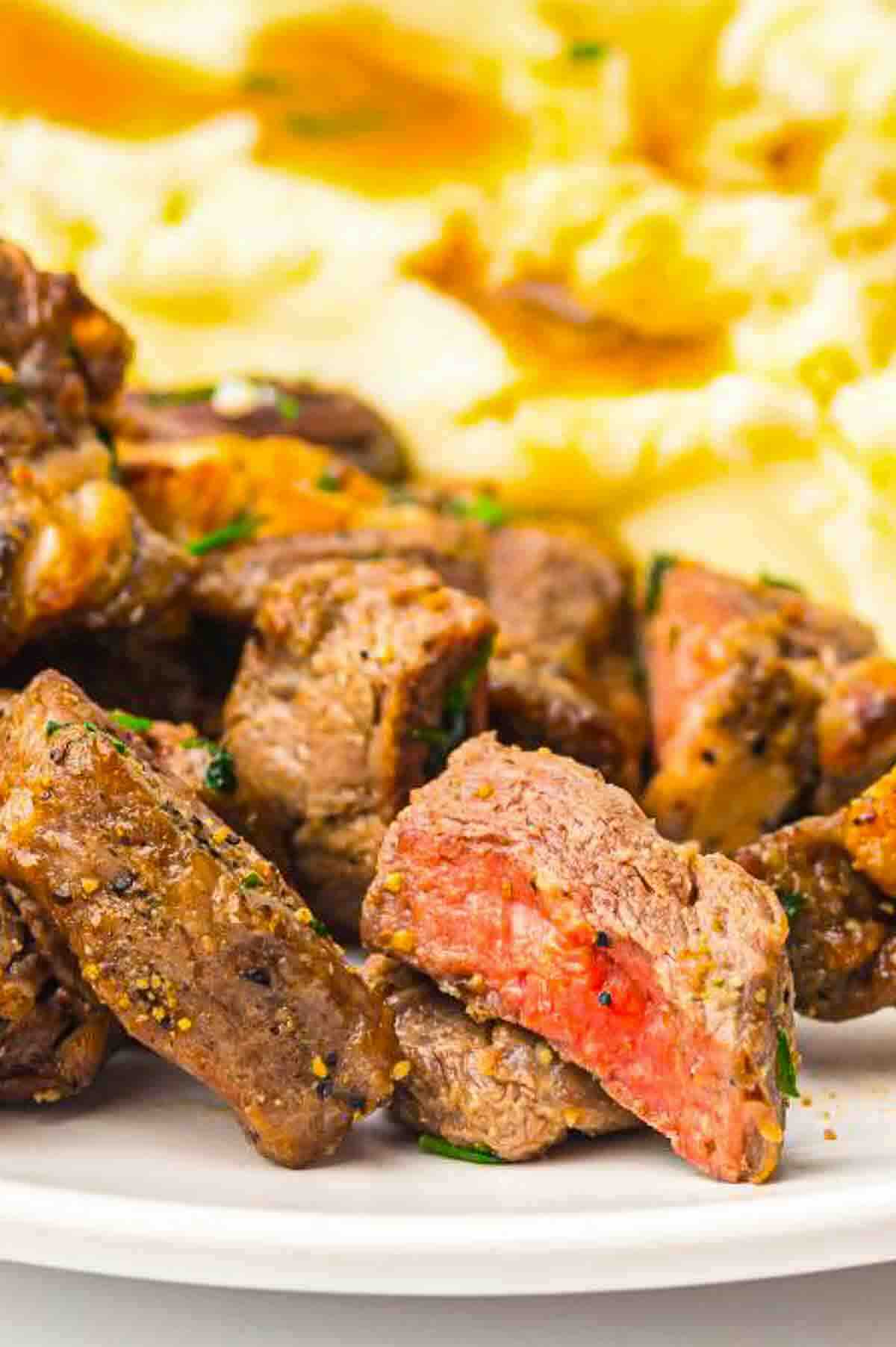
Searing isn’t just about getting that delicious crust, but a key food safety step. High temperatures on the outside of a steak help destroy bacteria that may be clinging to the surface, and that’s why searing all sides, including the thinner edges, is important.
If a steak has been mechanically tenderized, which is a common but often unlabeled process, things get trickier. Tiny blades or needles pierce the meat to make it softer, but they can also push bacteria inside. In these cases, a rare center may no longer be safe, making higher internal temperatures the better choice. Having a perfectly cooked steak makes any meal perfect, specially when paired with some cauli fried rice or squash casserole.
USDA Guidelines
The USDA sets the official benchmark for food safety, recommending that whole cuts of beef reach an internal temperature of 145°F (63°C), followed by a rest time of at least three minutes. That rest period helps ensure that heat continues to kill off any lingering bacteria.
These guidelines aim to strike a balance between safety and flavor. Still, many chefs and steak fans prefer rare or medium-rare finishes, which usually fall below 145°F. That’s where knowing your source and cooking method becomes even more critical.

Final Slice of Insight
Rare steak isn’t off-limits, but it’s not a free pass either. The safety depends on the steps taken long before a knife hits the plate, from sourcing and storage to searing and temperature checks. With bacteria like E. coli still causing outbreaks linked to undercooked beef, being informed matters more than ever. That pink center still appeals to many, but the real flavor comes from doing it right and knowing why that matters.
Pin Now and Savor Later
Need Support or have Questions? Join us on Facebook.
Follow us on Pinterest, Instagram, TikTok, Flipboard, or YouTube.
For weekly New Recipes and a FREE E-Book get into our NEWSLETTER.
