Looking for a warm and comforting meal that’s ready in one pot? This Asian noodle soup is packed with tender noodles, a flavorful broth, and fresh vegetables for a clean food boost. Perfect as an easy Chinese noodle soup or a quick noodle soup recipe, it’s a delicious way to enjoy a hearty, one-pot meal any day of the week.
The first chilly breeze of winter had me craving something warm and comforting. I remembered my supply of shirataki noodles and thought, “Why not make a big pot of Asian noodle soup?” As the broth simmered, I felt instantly cozy and ready to enjoy a steaming bowl to fight off the cold.

Cooking the Noodles Separately
Cooking the noodles on their own keeps them from getting too soft or mushy. It also lets you control the texture so they stay springy in your soup. Once cooked, they just need to be added to the hot broth before serving.
What are Shirataki Noodles
Shirataki noodles are thin, low-carb noodles made from konjac root. They soak up the flavors of your soup while staying light and chewy. These noodles are perfect if you want a cleaner noodle option.
Flavors from the Broth
The broth is the heart of any noodle soup and sets the tone for the whole dish. Using aromatics, spices, and a bit of soy sauce or miso creates deep, rich flavors. Let it simmer slowly to really bring out all the taste. Breaded dill pickled gherkin is a perfect appetizer for this.

No-Fuss Guide to Making Asian Noodle Soup
Asian noodle soups are simple, warm, and full of flavor. You’ll get tender noodles, vegetables, and a savory broth all in one bowl. It’s quick to make and perfect for a comforting meal anytime.
Get Your Cooking Crew Ready
- Cooking Pan: Perfect for sautéing vegetables or gently warming ingredients before adding them to the soup.
- Cooking Pot: Used to simmer the broth and bring all the soup components together for rich, developed flavors.
- Sieve: Strains the broth to achieve a smooth, clear base for the soup.
Ingredients You’ll Need for Flavor Explosion:
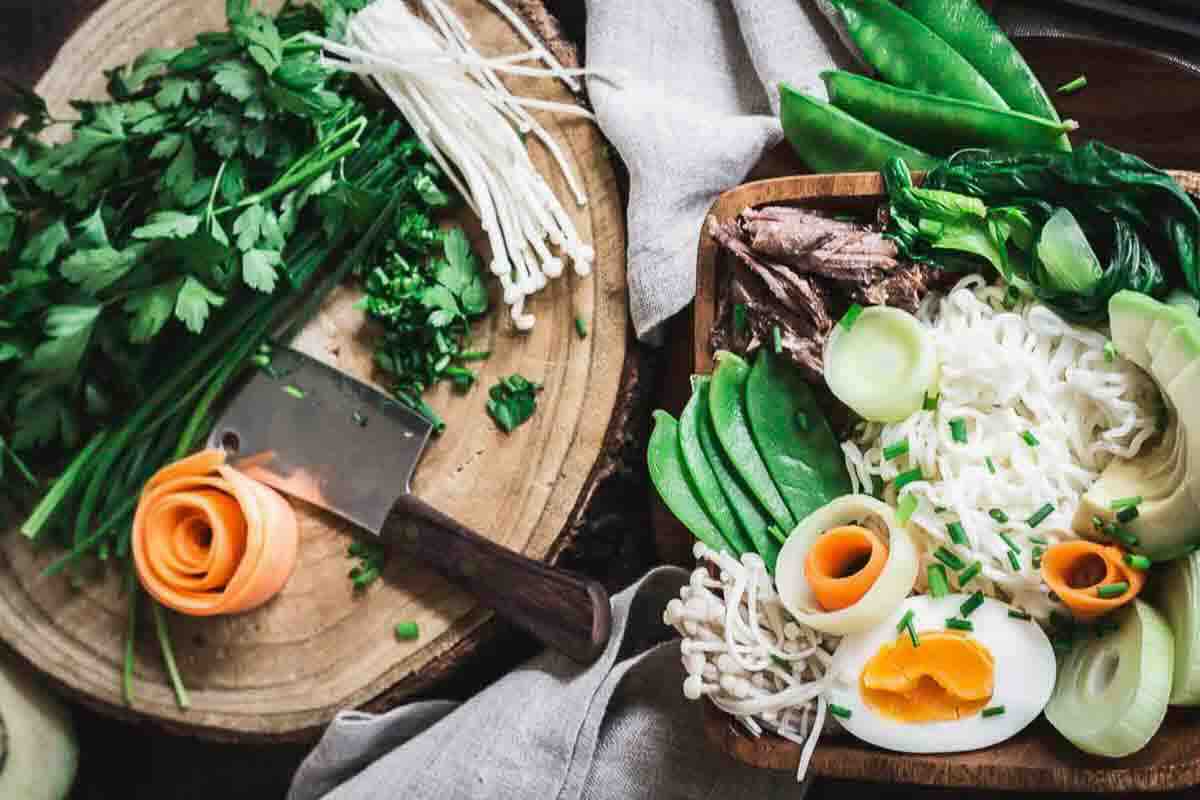
- Eggs: Add protein and richness to the soup.
- Bone Broth: Forms a flavorful and nourishing base.
- Peas: Provide a pop of sweetness and texture.
- Bok Choy: Adds a mild, leafy crunch.
- Leek: Gives a subtle onion-like flavor.
- Avocado: Adds creaminess and clean fats.
- Shirataki Noodles: Low-carb noodles that soak up the broth.
- Enoki Mushrooms: Offer a delicate, tender texture.
- Carrot: Adds natural sweetness and color.
- Chicken: Provides protein and hearty flavor to the soup.
*Exact measurements are listed in the recipe card below.
Your Flavor-Packed Game Plan for Easy Homemade Asian Noodle Soup
One: Gather Ingredients
Collect all the essentials for your noodle soup: shirataki noodles, bone broth, mushrooms, cooked chicken, and any vegetables you like. Adjust the types and amounts to match your taste. Having everything ready makes assembling the soup much easier.

Two: Rinse the Shirataki Noodles
Shirataki noodles are packed in liquid that can smell strong, so rinse them thoroughly under hot water. Keep rinsing until the odor is gone and the noodles feel clean. This ensures your soup will taste fresh and not have any off-putting flavors.

Three: Lightly Toast the Noodles
Heat a little oil in a pan over medium heat and add the rinsed noodles. Stir and cook for a few minutes until they develop a firmer, pasta-like texture. Season with a pinch of salt and pepper to enhance their flavor before combining with other ingredients.

Four: Cook the Protein
Prepare your chicken or preferred protein in a separate pan until fully cooked and tender. This helps retain moisture and ensures even flavor. Having the protein ready separately makes layering your soup easier.

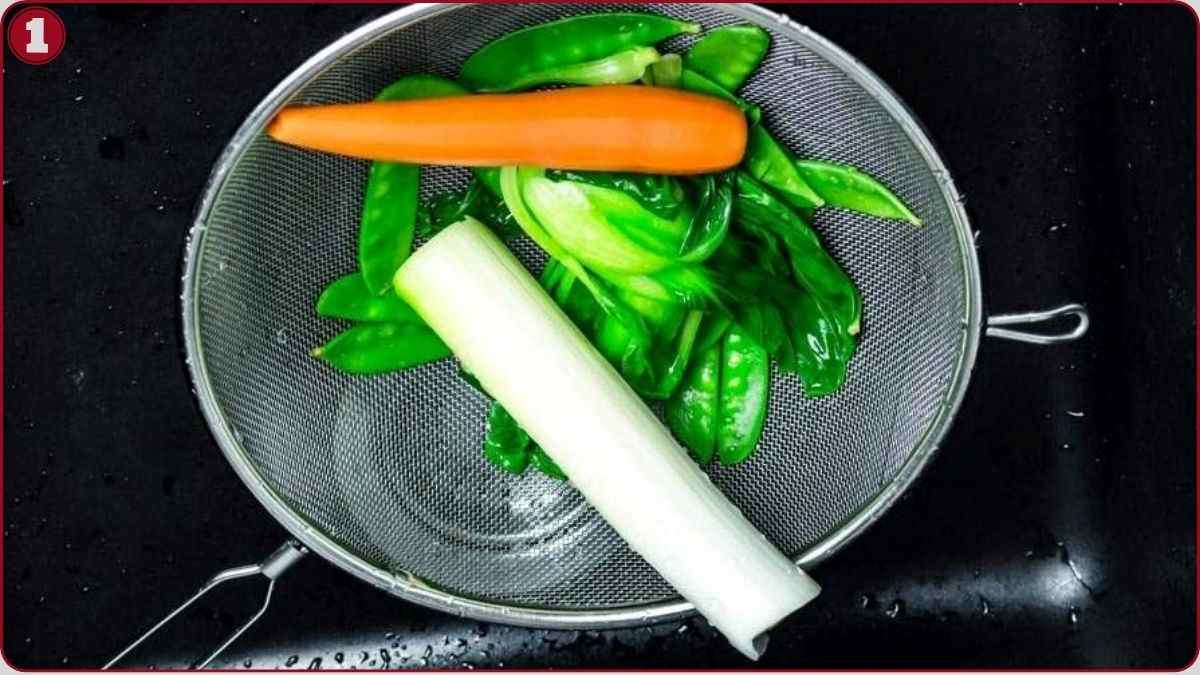
Five: Blanch the Vegetables
Bring a pot of water to a boil, then add your vegetables and cook time should be 1–2 minutes, until slightly tender. Start with denser veggies or larger mushrooms since they take longer. This keeps the vegetables crisp, bright, and flavorful.

Six: Assemble the Soup Bowl
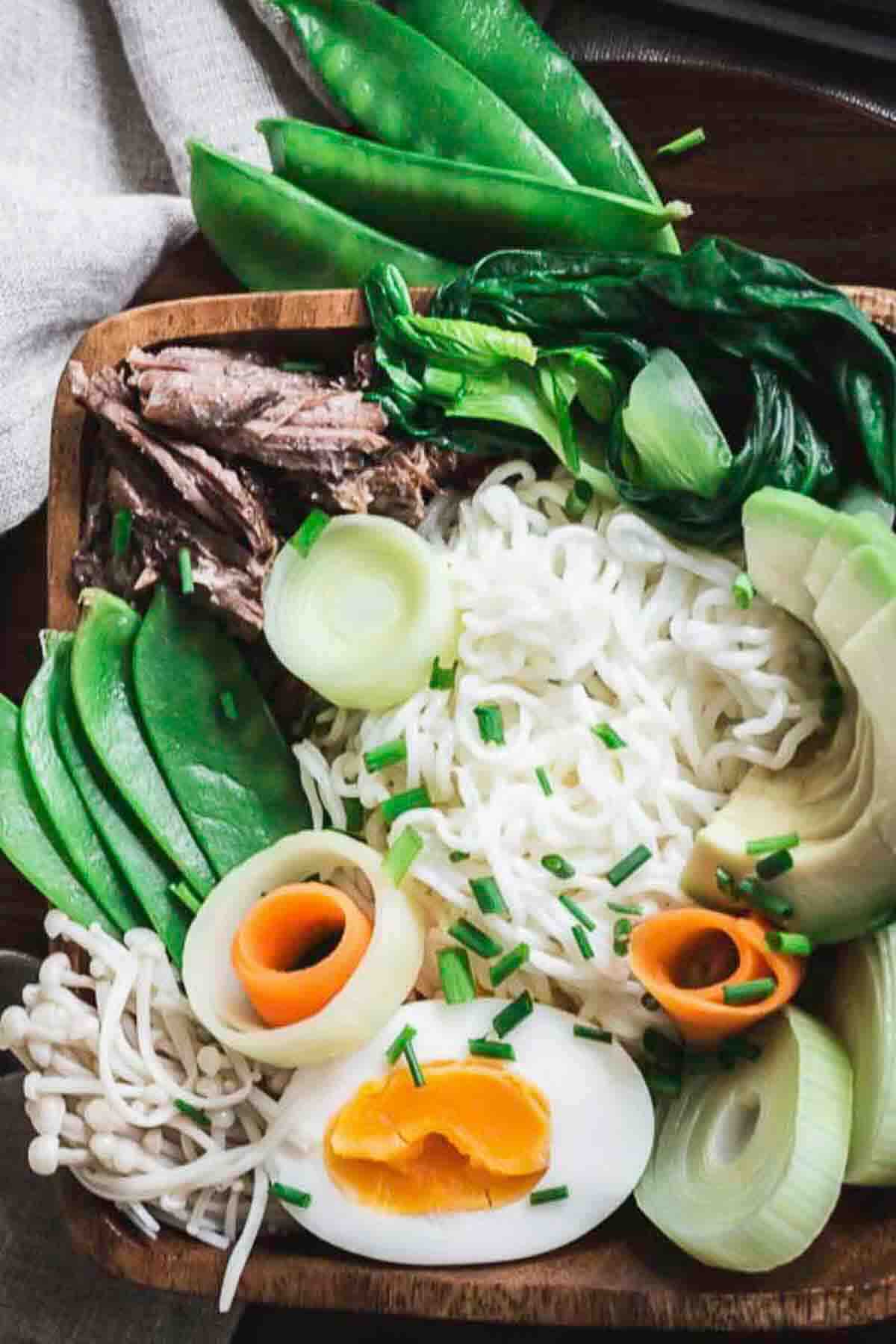
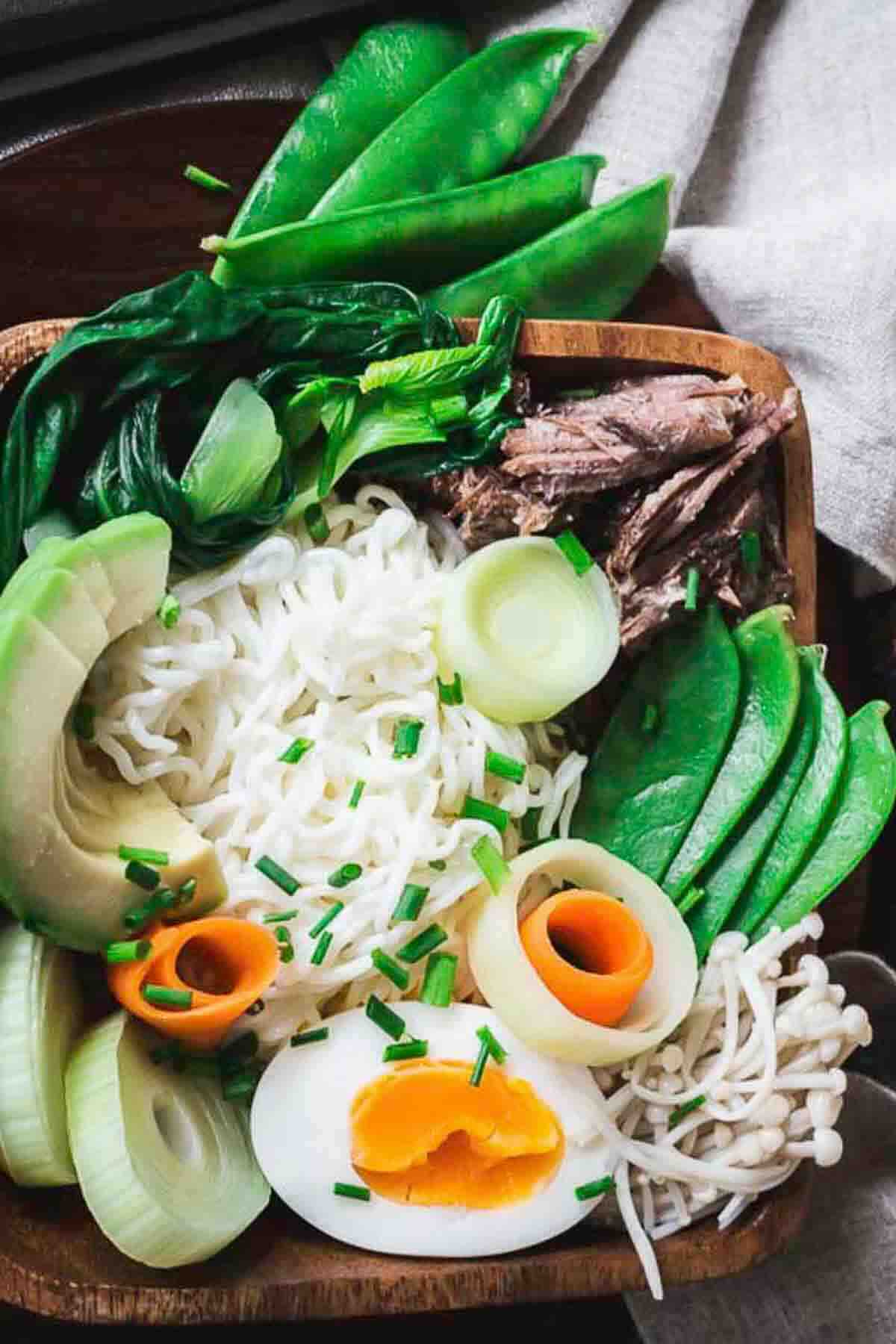
Drain and quickly rinse the vegetables with cold water to stop cooking. Place the toasted noodles in your bowl, then layer the blanched vegetables and cooked chicken on top. Finish by pouring hot bone broth over everything to create a warm, balanced noodle soup.
Pro Tips for Flavor Hacks:
- Boost the Broth: Add a splash of soy sauce, fish sauce, or miso to deepen the flavor. Let it simmer a little longer to really bring out the taste.
- Perfect Noodle Texture: Cook your noodles separately to avoid them becoming mushy in the broth. Drain and rinse them with cold water before adding them to the soup.
- Add Fresh Herbs: Finish the soup with fresh cilantro, green onions, or Thai basil. It brightens the flavors and gives each bowl a fresh, vibrant touch.
- Customize the Soup: Include ginger, sesame oil, carrot, cabbage or even broccoli as toppings. You can adjust the veggies to your liking.
- Substitutes: If shirataki noodles are unavailable, you can use rice noodles, ramen noodles, egg noodles, or udon.
Kitchen Q&A: Let’s Crack It
What are the Best Pair-Ups to Try with Easy Chinese Noodle Soup?
Pair your noodle soup with simple sides like steamed dumplings or spring rolls for a full meal. Add a light kale salad or deep-fried pickles to balance the flavors. A cup of hot green tea also complements the warmth of the soup perfectly.
What are the Smart Storage Hacks for Noodle Soup?
Store the broth separately from the noodles if you plan to keep leftovers. This prevents the noodles from getting soggy. Use airtight containers and refrigerate for up to 3 days for best freshness.
Cool the soup completely before freezing to avoid ice crystals forming. Pour the broth and toppings into freezer-safe containers or bags, leaving space for expansion. Thaw overnight in the fridge and reheat gently on the stove for the best flavor.
More Easy-Breezy Recipes You’ll Love
If you’re in the mood to switch things up without adding stress, these recipes are a great place to start. The cold brew sorrel drink is refreshing and perfect when you want something cool and different. Feta scrambled eggs casserole works well for busy mornings or an easy dinner idea.
Cream of mushroom green bean casserole adds a cozy touch that fits nicely with many meals. Together, these recipes keep things simple while still feeling special.
Pin Now and Savor Later

Need Support or have Questions? Join us on Facebook.
Follow us on Pinterest, Instagram, TikTok, Flipboard, or YouTube.
For weekly New Recipes and a FREE E-Book get into our NEWSLETTER.
Get Your Printable Recipe Here
If You Loved It, Drop a 5-Star High Five!
Asian Noodle Soup
Equipment
- 1 Sieve
Ingredients
- 2 Pieces Eggs
- 2 Cups Bone Broth
- 1/2 Cup Peas
- 1 Cup Bok Choy
- 1/2 Piece Leek cut into rings
- 2 Slices Avocado
- 2 Packets Shirataki Noodles
- 1 Cup Enoki Mushrooms
- 1 Piece Medium Carrot thinly sliced
- 1½ Cups Diced Chicken
Video
Instructions
- Collect shirataki noodles, bone broth, mushrooms, cooked chicken, and vegetables, adjusting amounts to your taste so assembling the soup is smooth and quick.
- Rinse the noodles under hot water until the strong odor disappears and they feel clean, ensuring a fresh-tasting soup.
- Sauté the rinsed noodles in a little oil until firmer and pasta-like, adding a pinch of salt and pepper before combining them with the rest.
- Cook your chicken or other protein separately until tender and fully done so it stays moist and layers easily into the soup.
- Boil the vegetables for 1–2 minutes, starting with the denser ones, then drain and quickly rinse to keep them crisp, bright, and flavorful.
- Place toasted noodles in a bowl, add the vegetables and chicken, and pour hot bone broth over the top to bring the whole noodle soup together.
Notes
- Boost the Broth: Add a splash of soy sauce, fish sauce, or miso to deepen the flavor. Let it simmer a little longer to really bring out the taste.
- Perfect Noodle Texture: Cook your noodles separately to avoid them becoming mushy in the broth. Drain and rinse them with cold water before adding them to the soup.
- Add Fresh Herbs: Finish the soup with fresh cilantro, green onions, or Thai basil. It brightens the flavors and gives each bowl a fresh, vibrant touch.
- Customize the Soup: Include ginger, sesame oil, carrot, cabbage or even broccoli as toppings. You can adjust the veggies to your liking.
- Substitutes: If shirataki noodles are unavailable, you can use rice noodles, ramen noodles, egg noodles, or udon.
Nutrition
Disclaimer
Please note that nutrient values are estimates only. Variations can occur due to product availability and manner of food preparation. Nutrition may vary based on methods of origin, preparation, freshness of ingredients, and other factors.
simple sides to have
Simple sides should support your main, not compete with it. Seasoned vegetables, a quick salad, warm bread, or a small grain dish to round out the meal without overcomplicating it.